The gap between the best and worst Roblox campaigns is 10x in cost per play. Here are the optimization moves that close it.
There are developers on Roblox paying $0.01 per play from sponsored ads, and there are developers paying $0.12 for the exact same outcome on the exact same platform. That is not a rounding error. That is a 12x spread, and it persists week after week in the campaign data. The developers on the cheap end are not smarter or luckier. They run a specific optimization loop -- test a variable, measure the result, keep the winner, test the next variable -- and they do it every single week. This article is that loop, written down.
What the Best Campaigns Have in Common
Best and worst anonymized campaign cohorts by cost per play (CPP)| Cohort | Type | Targeting | CPP | CTR | Play Rate |
|---|
| Best | trend-social | mobile-tablet | $0.001 | 6.03% | 3.87% |
| Best | obby-platformer | all-devices | $0.001 | 4.52% | 2.93% |
| Best | obby-platformer | all-devices | $0.001 | 4.99% | 3.35% |
| Weak | trend-social | all-devices | $0.017 | 3.80% | 2.27% |
| Weak | casual-arcade | all-devices | $0.010 | 2.96% | 1.62% |
| Weak | trend-social | all-devices | $0.010 | 2.80% | 1.49% |
When you line up the top-performing campaigns against the bottom, three patterns emerge immediately. The best campaigns use custom thumbnails designed specifically for the ad slot -- not repurposed game icons. They target narrow audience segments rather than spraying impressions across every demographic. And they schedule around competition density instead of chasing maximum reach during peak hours. None of these are expensive. None require special access or insider tools. They are just deliberate choices that most developers skip because running a single broad campaign feels easier.
The bottom performers share a different pattern, and it is remarkably consistent. Broad targeting across all ages and genders. The default game icon as the ad creative. Peak-hour scheduling that puts them in a bidding war with studios spending 50x their budget. But the real killer is not any single bad choice -- it is running one campaign, seeing bad results, and concluding that ads do not work. A developer who spends 50,000 Robux on one untested campaign learns nothing except disappointment. A developer who splits that same budget across five experiments -- different thumbnails, different targeting, different time windows -- walks away knowing exactly what works for their specific game. That knowledge compounds every week.
Your Thumbnail Is Doing More Damage Than Your Budget
Creative variance snapshots from aggregated ad-level data| Genre Cohort | Objective Group | Min CTR | Max CTR | Spread |
|---|
| trend-social | maximize-plays | 0.00% | 2.59% | 2.59% |
| obby-platformer | maximize-plays | 2.60% | 4.81% | 2.21% |
| trend-social | maximize-plays | 2.05% | 3.94% | 1.89% |
| casual-arcade | maximize-plays | 1.41% | 3.12% | 1.71% |
| other | retention-reactivation | 4.58% | 6.27% | 1.69% |
| trend-social | maximize-plays | 2.86% | 4.49% | 1.63% |
If you could only optimize one thing, optimize the thumbnail. The creative variance data is stark: within the same genre, same targeting, same budget, the spread between the best-performing and worst-performing thumbnails is routinely 2-5x in click-through rate. That means a thumbnail swap -- changing nothing else -- can triple your results. Most developers test exactly one thumbnail, see mediocre numbers, and blame the platform. Developers who test three to five variants almost always find one that dramatically outperforms the rest. The floor is low and the ceiling is surprisingly high.
Here is where Roblox ads get awkward compared to other platforms: you cannot A/B test thumbnails within a single campaign. There is no built-in split-test feature. Instead, you run Campaign A with Thumbnail 1 for 48 hours, then Campaign B with Thumbnail 2 for 48 hours on identical budget and targeting. Compare on cost per play, not click-through rate -- this distinction matters. A clickbait-style thumbnail can juice CTR while tanking play rate, because the players who clicked feel misled when they see the actual game page. The best-performing thumbnails create accurate curiosity: they show what the game genuinely looks like, but at a moment that makes you want to see what happens next. Overpromising in the thumbnail is a short-term CTR hack that destroys your CPP.
![The Lakehouse [HORROR]](https://tr.rbxcdn.com/180DAY-04770c151643e58635d34484580534a0/768/432/Image/Png/noFilter)
The Lakehouse [HORROR]NRFL Studios
![[🪲CELL🪲] Universal Tower Defense](https://tr.rbxcdn.com/180DAY-b6a095ef3ab5fd5c388db667774ccaea/768/432/Image/Png/noFilter)
[🪲CELL🪲] Universal Tower DefenseUniversal Tower Defense [UTD]
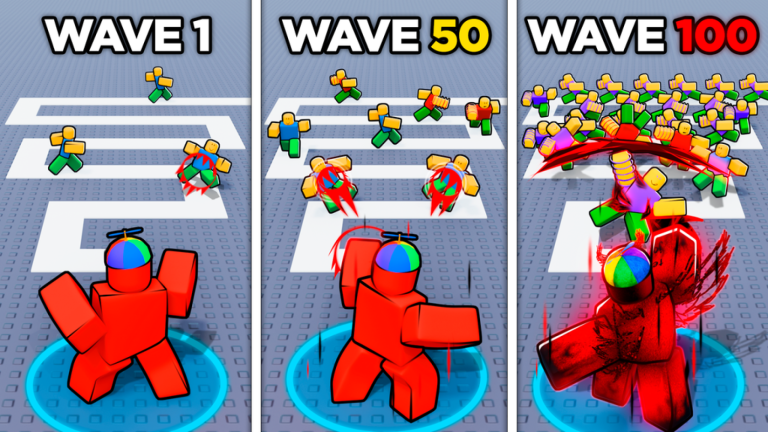
☠️ YORICK | Retro Tower DefensePlaything Games
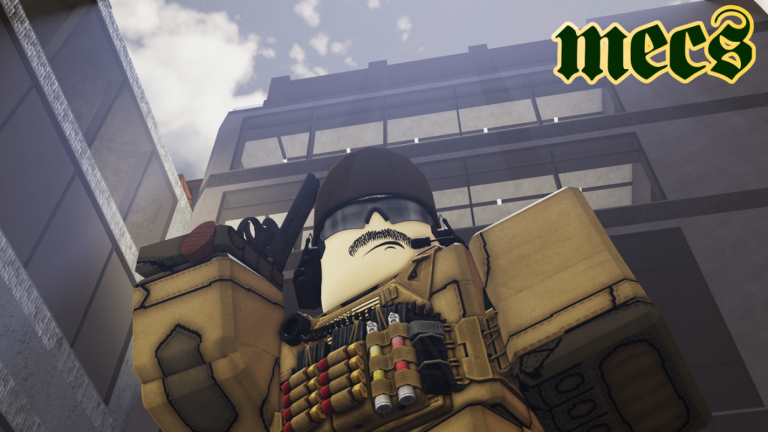
mid eastern conflict simImmaGoSickoMode
![[🔥LAVA🔥] Guns & Glory](https://tr.rbxcdn.com/180DAY-3d1e7f43fded89826ce67d7e8bb9fea1/768/432/Image/Png/noFilter)
[🔥LAVA🔥] Guns & GloryISG Gaming

Steal a BrainrotBRAZILIAN SPYDER
![The Curse [HORROR]](https://tr.rbxcdn.com/180DAY-e64dabe94751ab68a52c5a46b031717d/768/432/Image/Png/noFilter)
The Curse [HORROR]ItzMePanos
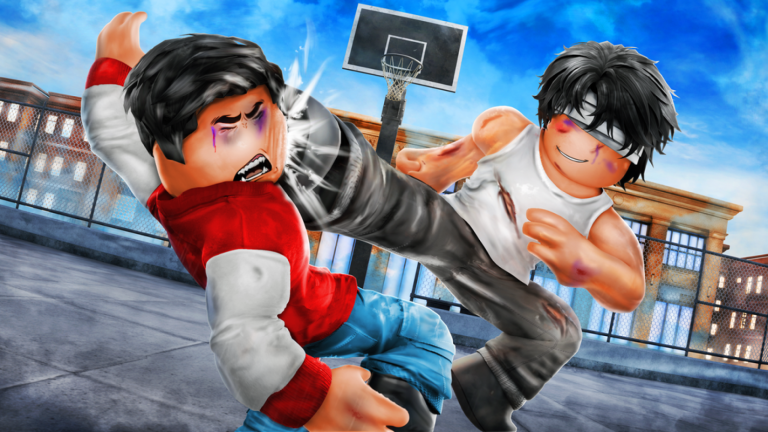
Streetbound: FightingStreetbound Community
SnoutUp's testing data -- best CPP of 4.5 Robux, mobile outperforming PC, and CTR ranging from 0.7% to 3% -- shows exactly the kind of iterative variable isolation that separates optimizers from guessers.
Best CPP around 4.5 Robux per play, mobile consistently outperforms PC, CTR ranged from 0.7% to 3% depending on the icon.
My Experiments with Sponsored and User Ads (SnoutUp)
Narrower Targeting Costs Less (Not More)
Targeting cohort comparison (anonymized)| Targeting Cohort | Spent | Plays | Median CTR | Median Play Rate | Median CPP |
|---|
| mobile-tablet | $755.70 | 268,979 | 3.32% | 2.03% | $0.003 |
| all-devices | $4,971.76 | 1,196,761 | 3.85% | 2.06% | $0.004 |
| pc | $27.34 | 3,406 | 0.65% | 0.49% | $0.008 |
Performance by objective group (anonymized)| Objective Group | Spent | Plays | Median CTR | Median Play Rate | Median CPP |
|---|
| maximize-plays | $5,401.68 | 1,390,492 | 3.40% | 1.98% | $0.004 |
| new-user-acquisition | $115.09 | 32,671 | 3.07% | 1.76% | $0.006 |
| retention-reactivation | $238.03 | 45,983 | 4.56% | 3.02% | $0.007 |
This is counterintuitive for anyone used to social media advertising, where narrower audiences cost more. On Roblox, narrower targeting consistently produces lower cost per play, even though you reach fewer total players. The reason is the auction system: Roblox rewards engagement quality. An ad shown to a tightly matched audience gets better click and play rates, which tells the algorithm the ad is high quality, which earns it better placement at lower bids. It is a virtuous cycle. The optimization playbook is straightforward -- launch your first campaign with moderate targeting, let it run for 48 hours, then check which demographic segments actually converted. Age bracket, gender, device type. Build a second campaign targeting only those converting segments. Expect CPP to drop 20-40% on the second pass with no other changes.
Roblox's Sponsoring Experiences documentation details targeting tiers -- age bracket, gender, device type -- and auto-bidding behavior, which directly determines how narrowing your audience reshapes auction dynamics and CPP outcomes.
Roblox documentation reference: Sponsoring Experiences | Roblox Creator Docs.
The Cheapest Impressions Are at 4 AM
Highest observed hourly competition window: 19:00 UTC (85.85 avg sponsors).
Strong weekday-hour hotspot: Mon 20:00 UTC.
Hourly Sponsor Competition (7d)
Bid competition follows a predictable daily curve, and most developers pile into the expensive part of it. Sponsor density peaks between 16:00 and 22:00 UTC -- exactly when the biggest studios concentrate their spend and exactly when most developers instinctively schedule their campaigns. Running during off-peak windows like 02:00-08:00 UTC or moderate windows like 10:00-14:00 UTC typically cuts effective CPP by 30-50%. Yes, you get fewer total impressions. But for optimization purposes, that is actually the point. Cheaper impressions let you test more variables per Robux. Run your experiments off-peak where the data is affordable, identify the winning combination, then scale that winner into peak hours where the volume is. Paying peak prices while still figuring out your thumbnail and targeting is burning money on guesswork.
Daily Sponsor Volume (30d)
The Four-Week Optimization Playbook
- Week 1 -- Find your thumbnail. Run three thumbnail variants at 10,000 Robux each with identical targeting during off-peak hours. Judge by cost per play, not CTR. Kill the two losers. If all three perform similarly, your thumbnails are too similar -- try something radically different in round two.
- Week 2 -- Lock your audience. Take the winning thumbnail and test two targeting setups: narrow (single age bracket plus single gender) versus moderate (single age bracket, all genders). Same budget, same time window. Keep the lower-CPP variant. This step alone usually delivers the biggest single-week improvement.
- Week 3 -- Optimize timing. With your best creative and targeting locked, split-test schedule windows. Run one campaign off-peak and one at moderate-peak on equal budgets. Compare not just CPP but total play volume -- the goal is finding the point where cost efficiency and volume intersect for your specific budget.
- Week 4 -- Scale carefully. Double the daily budget on your winning combination and monitor CPP daily. If cost per play rises more than 25% after scaling, you have hit a ceiling. Pull the budget back and extend the campaign duration instead of pushing harder into diminishing returns.
- Ongoing -- Refresh your creative monthly. The same thumbnail loses effectiveness after 3-4 weeks of continuous use because the same players keep seeing it. Creative fatigue is real and measurable. Restart the thumbnail test from Week 1 every month while keeping your targeting and timing locked.
Anonymized real-ad benchmark ranges from aggregated Roblox Ads exports| Metric | Min | Median | P75 | Max |
|---|
| CTR (%) | 0.65 | 3.60 | 4.52 | 6.03 |
| Play Rate (%) | 0.49 | 2.02 | 2.82 | 3.87 |
| CPP ($) | 0.001 | 0.004 | 0.005 | 0.017 |
Roblox reported a 44% decrease in CPP and 57% increase in qualified play-through rate from the 16:9 format rollout alone -- hard evidence that creative format optimization delivers the largest single-variable improvement available on the platform.
16:9 landscape creative drove 57% qualified play-through rate increase and 44% CPP decrease. 91% of ad spend now runs through the new Ads Manager.
Ads Manager Updates - August 2025
References